




Description
Introduction:
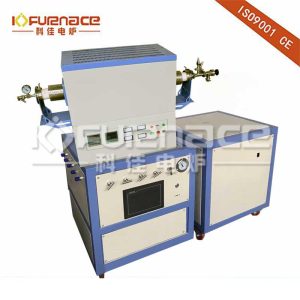
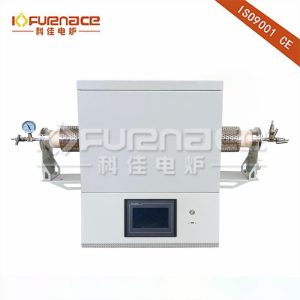
This series of single-zone tube furnaces is a general-purpose high-temperature heat treatment equipment for laboratories. It uses a high-purity quartz tube as the working tube, combined with a closed furnace chamber structure and high-quality resistance heating wire, achieving stable heating up to 1200℃. The equipment integrates a precise temperature control system, a double-layer air-cooled shell, and multiple atmosphere interfaces, meeting various process requirements from basic material annealing to complex atmosphere protection.
Core Structure:
- Furnace Chamber: Made of high-purity alumina ceramic fiber material, offering excellent insulation performance and low heat loss.
- Heating Element: High-quality Fe-Cr-Al resistance wire (molybdenum-doped), distributed around the furnace chamber to ensure uniform temperature.
- Temperature Control System: 30-segment programmable PID controller, temperature control accuracy ±1℃, with over-temperature alarm and thermocouple breakage protection functions.
- Furnace Tube: High-purity quartz tube (corundum tube optional), standard dimensions: outer diameter 50/60/80mm, length 600-1200mm.
- Sealing flange: Stainless steel quick-sealing flange with gas inlet/outlet, pressure gauge, and valve, supporting vacuum/atmosphere environments.
Optional configurations: Vacuum system (mechanical pump/molecular pump), multi-channel gas mixing system, remote computer monitoring interface, etc.
Application Areas
This equipment is widely used in laboratory research and development and small-batch production in fields such as materials science, chemistry, physics, new energy, and environment:
- Materials Synthesis and Processing:
- Powder Metallurgy: Reduction, sintering, and annealing of metal or alloy powders.
- Ceramic Materials: Debinding and pre-firing of ceramic green bodies such as alumina, zirconium oxide, and silicon nitride.
- Nanomaterials: Atmospheric-protected synthesis of carbon nanotubes, graphene, and nano-metal oxides.
- Crystal Growth: Growth of small-sized crystals via gas-phase transport or flux methods.
- New Energy Materials:
- Lithium Batteries: Pre-firing and solid-phase reaction of cathode materials (lithium iron phosphate, ternary); carbonization and coating of anode materials (silicon-carbon, graphite).
- Fuel Cells: Synthesis of electrolyte powders; reduction treatment of electrode catalysts.
- Photovoltaic Materials: Annealing and crystallization of thin-film solar cells such as CIGS and perovskite.
- Chemical Engineering
- Catalyst Preparation: Calcination, reduction, and activation of supported catalysts.
- Chemical Vapor Deposition (CVD): Deposition of thin films (e.g., molybdenum disulfide, graphene) on planar substrates.
- Pyrolysis Reactions: Pyrolysis of organic precursors or biomass to produce carbon materials.
- Environment and Geology
- Sample Ashing: Ashing of organic matter in environmental samples such as soil and sludge.
- Mineral Phase Transition: Simulating high-temperature geological processes to study mineral phase transition behavior.
- Higher Education Teaching and Research:
- Serving as a basic heat treatment experimental platform for teaching demonstrations and student research projects in materials science, chemistry, and physics.
Features
- Excellent dynamic sealing system can vacuum and ventilate the atmosphere. The furnace tube and the flange are extruded and sealed with a silicone O-ring, which is easy to remove and has strong sealing performance. It can be evacuated and filled with pr.
- Temperature control accuracy can reach ±1℃. The temperature control system adopts PID method and can set 30-stage temperature rising and cooling programs. The temperature control accuracy can reach ±1℃.
- The furnace tube is made of high-purity quartz glass material, which has extremely low thermal expansion coefficient, high temperature resistance, good chemical stability and good electrical insulation.
- At the same time, we can customize different temperatures, styles and control methods specifically for customers. Welcome to inquire.
- Vacuum/Atmosphere Dual-Use. Supports vacuum (≤10⁻¹ Pa) and inert/reducing/oxidizing atmospheres.
- Comprehensive safety protection. Over-temperature, over-current, thermocouple disconnection alarms and automatic power-off.
Technical Paramters
| Model | KJ-T1200-S25K1 | KJ-T1200-S30K1 | KJ-T1200-S40K1 | KJ-T1200-S50K1 |
| Top Temperature | 1200℃ | |||
| Working Temperature | ≤1100℃ | |||
| Quartz Tube Diameter (Customization) |
Φ25mm | Φ30mm | Φ40mm | φ50mm |
| Heating zone length (Customization) |
200/300mm | |||
| Insulation layers | High-Purity Alumina Ceramic fiber | |||
| Control Accuracy | ±1℃ | |||
| Temperature Sensor | N-type Thermocouple | |||
| Heating Element | 0Cr27Al7Mo2 Resistance Wire | |||
| Sealing | Flanges | |||
| Structure | Split | |||
| Optional | Vacuum pumps, Gas-mixing system with mass flowmeters or float flowmeters. | |||


Reviews
There are no reviews yet.